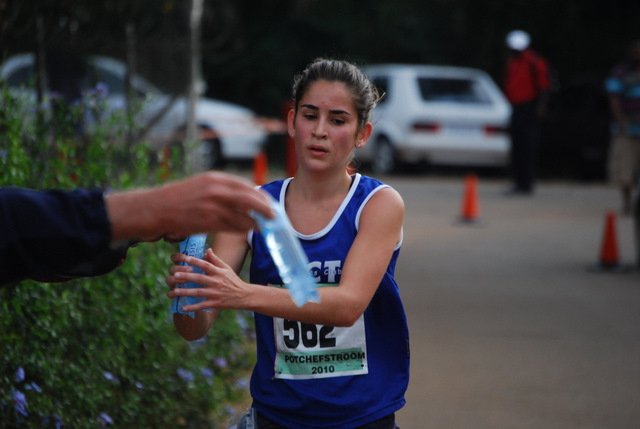
37:54. WHAT?! I thought to myself. I didn’t think it was possible. I hadn’t just broken 40 minutes, I’d smashed it. I was beaming. 10km in 37 minutes and 54 seconds. I knew I was getting faster, but that crept me to sit JUUUST behind the elites at races. Mind blown.
I phoned my parents in excitement. They didn’t get it. “Well done Bo, we’re proud of you.” My Dad said monotonous out of duty. “I’ll be in ‘A’ batch for 10k’s from now on!” I was over the moon and they were on a different page completely. “That’s good, well done.” Dad said again, making it sound like they had other, more important things to do. A quick, unexcited and slightly deflating call. At that stage I couldn’t understand why they weren’t as excited I was. My parents are particularly un-sporty and didn’t really enter into that part of who I was. A part of me that was fast becoming a large part of my identity.
They had engaged in exercise more as they aged, and as I’d cajoled them into it. But to them it was for health, not for challenge or progress. They walked almost daily, but the mildest bit of off-weather and their excuses to stay indoors ran riot. They certainly weren’t involved in exercise for identity. For 4 years my life became entwined in performing at University, running fast and playing touch rugby at a high level too. Everything was about goals, performance and prestige.
Training was 5 times a week for running, with a race on a Sunday. 2 fast, short sessions a week with three shorter, slower days. Then touch rugby was 4 times a week. I represented my province at that stage, but for some reason the fact that it was a minority sport made me less excited by the fact that I was playing that sport at nearly the highest level too.
I had just broken into the elite batch of runners and couldn’t quite comprehend what that meant to me. I didn’t know it at the time, but I was already struggling with what all of this meant. A few years later I was diagnosed with Bipolar 1, and I sometimes wonder whether my inability to deal with those thoughts and emotions was already affecting me as an athlete.
I wasn’t focusing on the enjoyment I got from running hard, fast and far. The warmth I produced on a cold, wet Cape Town winter day or the pleasant coolness of bouncing into the pool to cool off afterwards. My pleasure came from the time I got at the end, rather than the feeling of immense strength that the body I inhabited could produce. Or the endorphin soaked brain that relaxed into studies so easily after a good, hard run.
Sometimes I remember what my body could do and feel a pang of, I used to be that person. I could run a 37-minute 10km. I could train five times a week, play touch rugby four times, turn up to university and still have energy left over. There was a version of me who seemed almost limitless.
But remembering that person can be a trap.
Today. If I jog/walk 3km I feel similar to how I felt back then. Physically, not cognitively. It feels like a small win. Antipsychotics have an impact on energy, muscle bulk, heart rhythm, they even impact my white blood cells and recovery rate. Definitely not conducive to running the way I used to. I can still get the ‘runner’s high’, though. These days that’s what I do it for.
I’m a shadow of the athlete I was 15 years ago, thanks to antipsychotics. Running keep the weight down, gives me a sense of feeling like I’m getting off the couch for something, and makes me feel warm and fuzzy inside. I’ve stopped deriving my identity from that. 15 years down the line I haven’t completely rebuilt my identity, I’m still lost, but I am lost and not clinging. This is a step further than I was a couple of years ago. It’s difficult to mourn a former-self when rebuilding something of the same calibre is distinctly hindered by medications or health conditions.
My reasons for running these days are to give me something to be proud of. Something to say “look what I do in spite of it all”, and hey – why aren’t YOU getting off your bum and doing something too? So, while running while taking antipsychotics isn’t always fun or comfortable. The side effects of the exercise make it so much easier to get through the tough part of living with Bipolar with Psychosis. I’ve come to a place where I’m not trying to derive my identity out of performance anymore. I’m just trying to create myself to be a person I’m proud of again.
Leave a Reply